Future Civilizations / EXPLAINER
A Space Settlement Is a Maintenance Problem
Before imagining a distant city's skyline, ask how it replaces a filter, preserves knowledge and recovers from an ordinary failure.

Start below the skyline
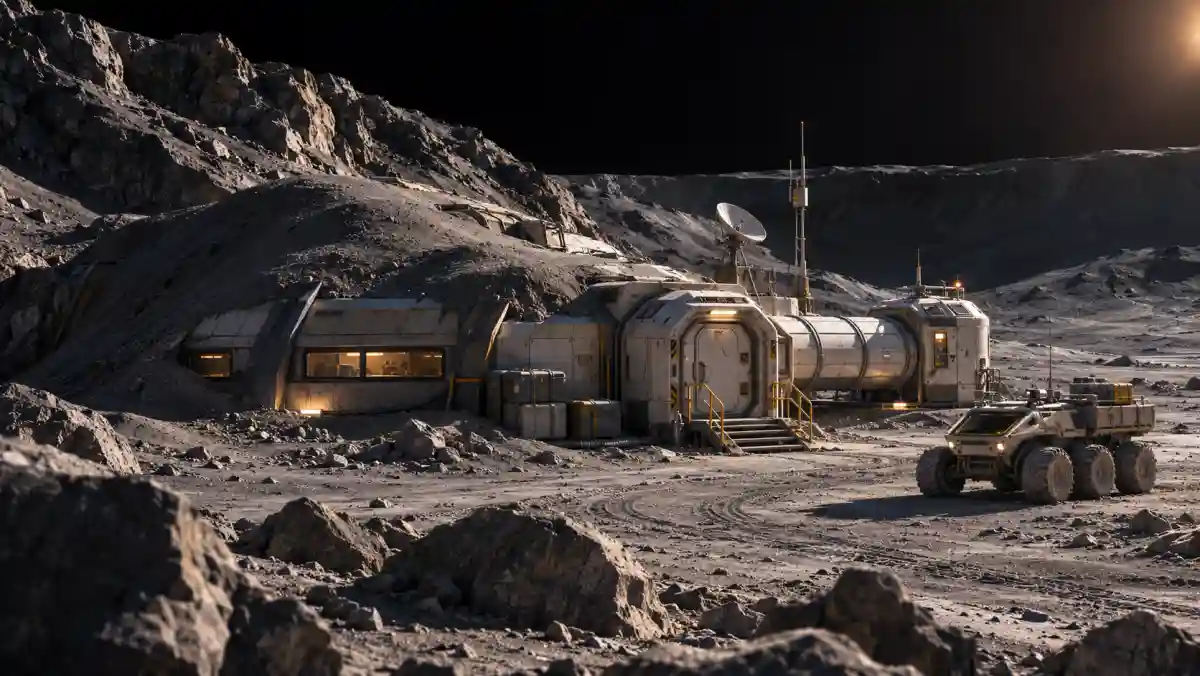
Illustrations of future settlements usually begin with architecture: glowing towers, transparent domes or rotating habitats against a field of stars. A more revealing thought experiment begins inside a maintenance room. A pump is making an unfamiliar noise. The replacement part is unavailable. The person who knows the system best has left. What happens next?
This is not a prediction of a particular settlement. It is a way to test the completeness of an imagined one. A society lasts through repeated ordinary days, including equipment failures and changes in personnel. Its ability to preserve essential functions may tell us more about its durability than the scale of its most spectacular construction.
Recycling is an achievement with a denominator
In 2023, NASA reported that the International Space Station's environmental control and life-support system had demonstrated approximately 98 percent water recovery. This is a substantial engineering achievement. It is also a reminder to read a percentage in context: water recovery describes a particular resource loop, not complete independence from outside supplies.
For a simplified thought experiment, imagine a habitat processing 100 units of water per day and recovering 98. It would need to replace two units each day under those assumptions, or sixty over thirty days. The arithmetic is deliberately simplified; actual systems have storage, variable use and multiple flows. Its purpose is to show that a high recovery percentage still leaves a continuing material requirement.
A closed loop remains a working system
ESA's MELiSSA research explores regenerative life support using interconnected biological and chemical processes. Its stated objectives include developing safe, reliable systems for sustained human presence in space. The program represents research toward deeper resource recycling, rather than evidence that a fully independent human settlement has already been achieved.
In an imagined habitat, greater recycling could reduce some supply needs while increasing reliance on equipment, monitoring and specialized knowledge. The relevant comparison would include the entire system. A process that saves water but demands hard-to-replace components creates a different dependency. Good design would make those dependencies visible so that planners can compare realistic alternatives instead of treating closure as a single yes-or-no property.
Repair capacity changes the meaning of a spare
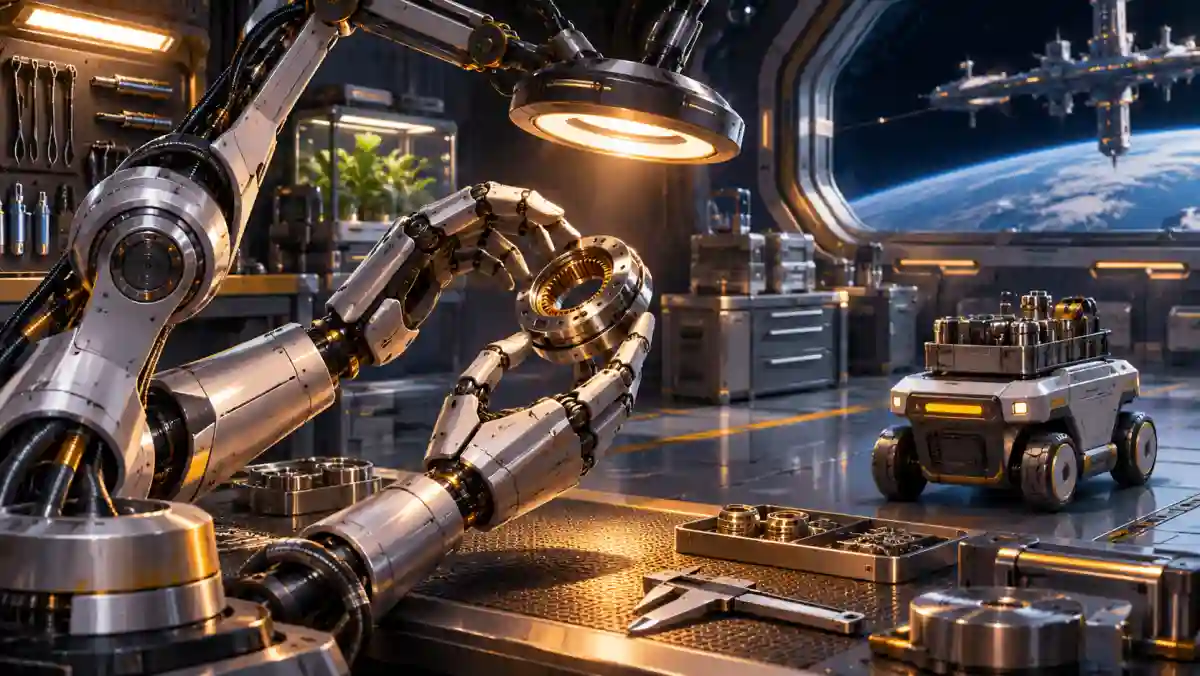
Suppose two hypothetical settlements each hold ten spare pumps. One can inspect failed units, replace standard components and verify the repaired result. The other can only exchange a failed pump for a complete spare. Their inventories look identical on arrival, but their ability to respond over time differs substantially.
This suggests a useful distinction between stock and capability. A stock of parts buys time. A capability to diagnose, repair and test can extend the usefulness of that stock. Neither eliminates the need for materials or expertise. The thought experiment simply shows why a durable infrastructure plan would track what residents can restore, not only what they can initially install.
Institutions are part of life support
Knowledge has its own maintenance requirements. In our imagined settlement, a repair procedure that exists only in one person's memory is a fragile resource. A clear record, practical training and a way to update mistakes make the capability easier to preserve. The same applies to decisions about inspection intervals, replacement priorities and responsibility during an interruption.
These are proposed design principles, not evidence for one inevitable political system. Different communities could organize the work differently. Any arrangement would still need a credible answer to who notices a problem, who can act and how the community learns from it. Technical resilience and social coordination meet in those everyday responsibilities, where an ambiguous handoff can become a physical failure.
Judge a civilization by its ordinary recoveries
A useful fictional stress test is to remove one convenient assumption at a time. Delay a shipment. Lose a specialist. Interrupt a sensor. Then ask which services continue, what must stop and how the system returns to normal. This does not produce a complete engineering design, but it reveals where an imagined future depends on invisible help.
The exercise also makes the future more interesting. A mature settlement might express its sophistication through accessible machinery, reliable records and repairable products rather than uninterrupted spectacle. Those qualities would not guarantee permanence, but they would create room to adapt. Before asking how large a future civilization could become, it is worth asking how competently it could care for the systems that let another ordinary day begin.
Sources & further reading
Primary sources behind this article. Illustrative scenarios and design judgments are identified in the text.